Paddle Court Awards · buyer guide
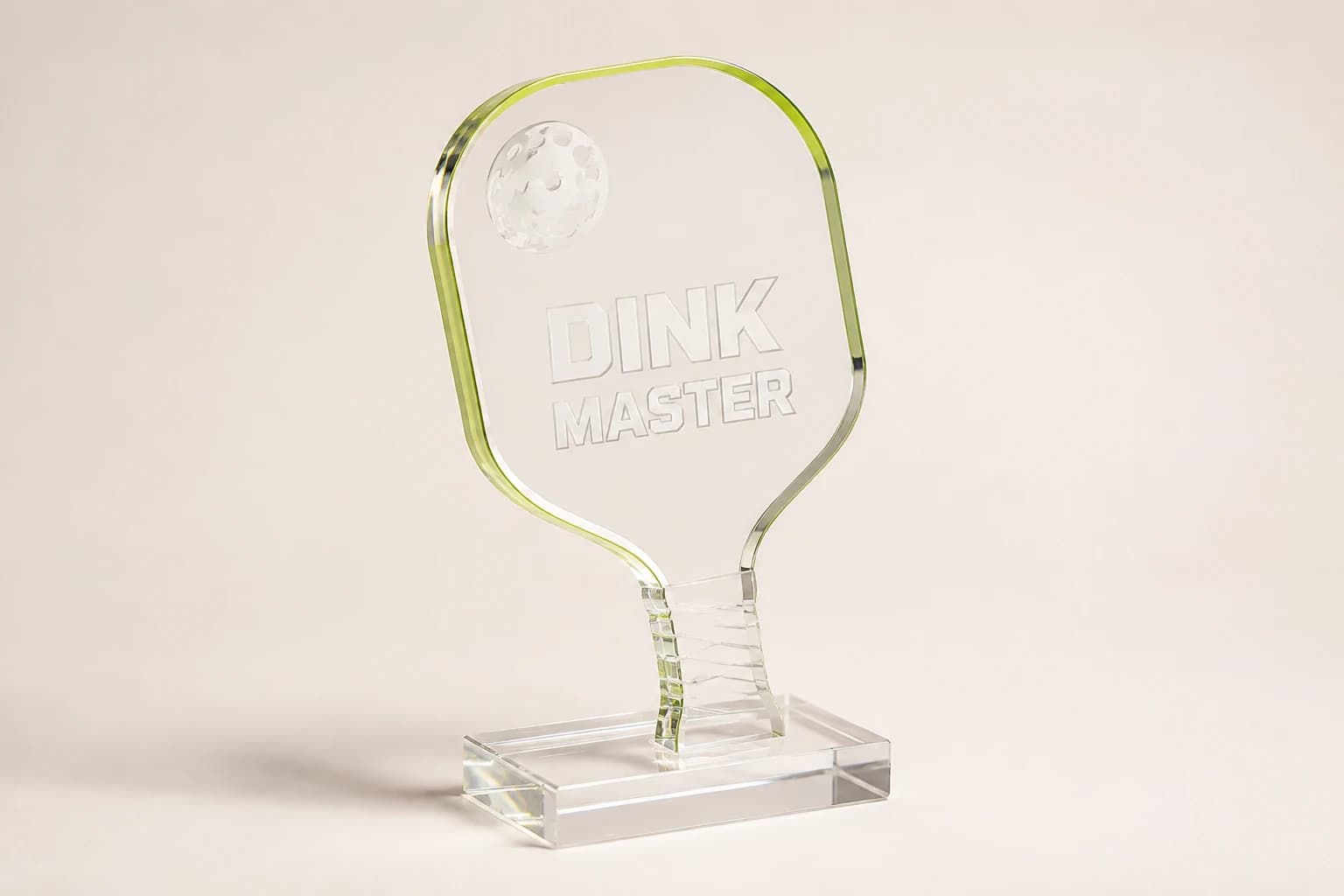
Paddle-shaped pickleball trophies: flat silhouettes or layered designs
For a worldwide Paddle Court Awards paddle-trophy order, choose a flat silhouette when the paddle outline and inscription should read as one face, or a layered design when separate physical planes serve a clear visual purpose. Review the complete front, side and base arrangement. A paddle-shaped award is a decorative recognition object, not playing equipment.
Reviewed 2026-09-05 · AI-assisted editorial review. General buying guidance; illustrative scenarios are not customer case studies. Images are AI-generated concepts.
Which part of the paddle shape should carry the recognition?
Decide whether the paddle face, handle or a separate base panel carries the approved inscription. A recognizable outline can become crowded if every decorative detail competes with the recipient message. Give the central reading area a clear role before deciding how many layers, accent pieces or cutouts the trophy should have.
The buyer can ask for a simple front view with the actual event title placed where it belongs. If the handle becomes a narrow decorative extension, do not treat it as extra text area merely because it is part of the silhouette. The design should explain the sport and the achievement without requiring the viewer to search through overlapping shapes.


What makes a layered trophy different from a printed effect?
A layered trophy uses separate physical elements or planes in the confirmed assembly, while a printed shadow or outline can create a depth effect on one face. Ask the proposal to distinguish those constructions. Similar-looking front photographs may conceal a very different number of components, side profile and assembly requirements.
Have the drawing identify which elements are separate and how the proposed complete object is supplied. The buyer need not prescribe fastening details, but should understand whether the quoted trophy arrives assembled and which parts are included. A manufacturer’s example can illustrate that layered construction exists without establishing the dimensions or assembly method of the Paddle Court Awards proposal.
Trotec’s sports-trophy tutorial uses individual acrylic layers assembled into one trophy.
Sources: Trotec Laser: Acrylic sports trophy
How should the paddle and ball motifs relate?
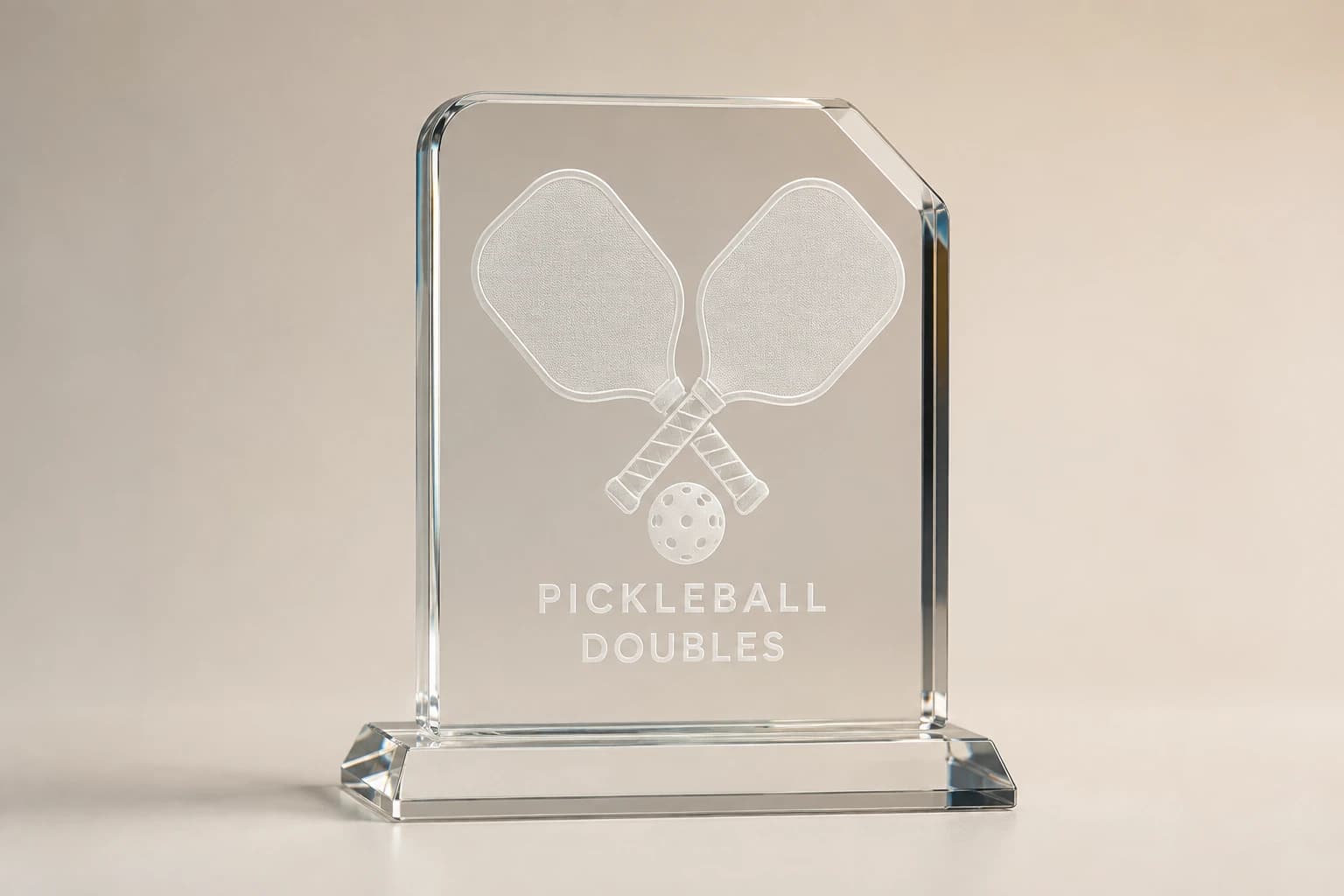
Use the paddle and ball as a readable visual relationship rather than a collection of unrelated cut shapes. Decide which motif is primary and where the ball sits in front of, behind or beside the paddle. The intended overlap should preserve the paddle’s recognizable face and handle from the principal viewing direction.
Review a version with the approved inscription present, because a ball accent can occupy the same area the designer needs for a name or event line. If the motif obscures essential text, move the decoration or change the hierarchy before reducing every word. The product’s job is recognition; the decorative geometry should help the viewer understand that job.
What should the side view reveal before selection?
Ask for a side view that shows the complete depth, visible spacing and relationship to the base. A layered front can look compact while projecting farther than expected on a shelf. The buyer should assess the assembled object rather than adding individual sheet thicknesses and treating that sum as the final trophy dimension.
The specification should distinguish material thickness, any spacing and the full assembled envelope. If the buyer has a particular display cabinet, provide its usable area for review. Do not infer stability or handling approval from a wider-looking base in a rendering. Those questions need the actual proposed construction and the responsible supplier’s confirmation.
How should layer colors be chosen?
Choose layer colors according to what each plane needs to communicate and how the complete trophy should read. A contrasting rim can define the paddle outline, while another plane may carry the inscription. More colors do not automatically create a clearer design, especially when translucent parts overlap or a background remains visible through them.
Ask for a representative view with the actual proposed materials and finishes identified. Keep printed color, colored sheet and metallic-looking surface as separate specifications. They can appear similar in a concept image but represent different treatments. If the event needs an approved brand color, request an appropriate sample review rather than promising an exact match from a screen preview.
Use the article’s example files
The worksheet contains fictional selection scenarios and unresolved specification fields. Replace them with the actual product proposal; sample dimensions and quantities are not catalog specifications or production approval.
Can fine details remain separate physical pieces?
Have the maker assess small decorative details as part of the actual proposed construction instead of assuming every line in a logo can become an independent layer. A narrow gap, tiny ball detail or detached accent can create a different fabrication problem from a printed mark. Ask which details remain physical and which use another treatment.
The buyer can preserve the essential sport identity while approving a simpler physical interpretation. Any simplified emblem or event artwork should still receive the owner’s approval. Do not convert a detailed graphic into a cut shape without showing what changed. The useful proof explains how the flat artwork has become a complete object, including features omitted or represented differently.
Should the inscription be on the paddle or a separate base plate?
Place the inscription on the paddle when the trophy should read as one graphic face, or on a separate base area when the layered motif needs room above it. Review both options with the actual approved text. A separate plate may clarify the visual hierarchy, but its dimensions and attachment remain part of the complete proposal.
Keep the recipient record understandable when the object is viewed at its normal display angle. A low base inscription can become secondary to a large paddle silhouette, so decide which details must remain immediately visible. The buyer should compare the complete assembled layout rather than approving the decorative body and text plate as unrelated images.
How do flat and layered proposals differ in the quote?
Ask Paddle Court Awards to quote the complete finished object, identifying separate layers, base, personalization, assembly, proofing and packaging. A flat silhouette with printed detail and a multi-component trophy may require different preparation. Compare the actual scope rather than assuming a fixed price increase for each additional layer or a guaranteed saving from a simpler shape.
If the maker suggests reducing complexity, ask what changes in the visible result and included components. Removing an unnecessary rear accent differs from removing the inscription panel. Keep proposed revisions tied to the approved design purpose. No invented layer price is needed: the buyer can compare real alternatives once each drawing and quoted total describes the same finished job.
What should be checked on the first completed design?
Check the front identity, side profile, inscription location and included components against the accepted drawing. Use the complete trophy to review the intended display view and any agreed handling information. A first article accepted for color alone should not become blanket approval of a changed base or omitted layer.
Record the actual design version and any accepted differences from the early concept. If a later batch uses another material or assembly treatment, have the affected details reviewed again. Give Paddle Court Awards the approved paddle relationship and finished-object scope so a reorder preserves the intended design rather than merely copying the outline from an old presentation photograph.
Illustrative example: what does a three-plane paddle concept need beyond its front view?
A fictional club compares a single-plane paddle silhouette with a concept using a rear outline, central paddle face and front ball accent. Both include a separate base in the proposal. The layered concept therefore describes three decorative planes plus one base, while the flat option describes one main face plus its base.
That component map does not establish thickness, spacing or assembly suitability. The worksheet asks the maker to confirm those fields and show whether the front ball accent covers any approved text. The club’s sample decision is to keep the recipient line on a defined base area in both proposals, allowing the paddle constructions to be compared without changing the recognition message.
If the front ball accent obscures the paddle outline, the club can ask for a printed ball treatment on the central face as another option. The resulting visual effect may differ even if the sport remains recognizable. The buyer reviews the new complete drawing and actual quote rather than assuming one fewer physical component automatically produces a specific saving.
Optional calculation: Optional count of finished paddle trophies
Which paddle-trophy construction serves the intended design?
Compare a flat silhouette, separate physical layers and a flat face with printed depth effects by the job each element performs. The choice should preserve paddle identity and a readable recipient message. Review the side profile and complete assembly scope before treating similar front views as equivalent finished trophies.
| Option | Useful when | Specification to confirm |
|---|---|---|
| Flat paddle silhouette | One strong outline and reading face are the priority | Usable inscription area, body and base |
| Separate physical layers | Depth and overlap serve a deliberate visual purpose | Component map, side profile and complete assembly |
| Printed depth effect | The design wants visual layering on one main face | Actual print treatment and approved appearance |
What should buyers confirm before ordering?
Paddle-shaped trophies need a clear translation from sport artwork to a finished decorative object. These answers cover quote scope, layered construction and inscription placement. Give Paddle Court Awards the intended paddle-and-ball relationship and approved text, then assess the complete proposal rather than expecting a flat graphic to define every physical detail.
What affects the price of a layered paddle trophy?
Ask Paddle Court Awards to identify the complete body, separate layers, base, decoration, personalization, assembly, proofing and packaging. Compare actual written totals for the finished designs. An additional layer does not carry a universal public rate, and reducing a component should be reviewed for its visual effect before assuming a specific saving.
Is a printed shadow the same as a physical layer?
No. A printed shadow can suggest depth on one face, while a physical layer is a separate element or plane in the confirmed assembly. Ask the drawing and quote to identify which construction is proposed. A front photograph alone may make these approaches appear similar while concealing different side profiles and component scopes.
Can the award be used as a pickleball paddle?
Treat the paddle-shaped trophy as a decorative recognition object. Its sporting outline does not establish playing-equipment construction, suitability or approval. The buyer should select it for display and the intended presentation, with the actual handling information supplied for the complete award rather than inferring use from its resemblance to a paddle.
Should the recipient name go on the paddle face?
Use the paddle face when it provides a clear reading area, or compare a separate base inscription when the motif needs that space. Review the actual approved text in the complete layout. A decorative ball or layered rim should not force essential names into an area too small for the intended presentation.
Does adding sheet thicknesses give the final trophy depth?
Not necessarily. The complete object can include spacing, a base and other components beyond the decorative sheets. Ask for the assembled dimensions and side view rather than treating the layer-thickness sum as a finished specification. Any shelf fit or handling assessment should use the actual complete construction supplied by the maker.
Sources and scope
The sources below support the cited technical details. The ordering workflows are editorial recommendations. Your project specification, price and schedule are established in the written quote and approved proof.
- Trotec Laser: Acrylic sports trophy · checked 2026-09-05
Which buying guide should you read next?
All buying guidesChoose a trophy, medal or combined award plan around what each partner takes home, how the ceremony works and the actual packed proposal. Compare the same recipient count and included personalization.
Give the club display and each player's keepsake a clear owner, inscription and physical count. Plan how the shared piece records future seasons and how personal recognition stays with both partners.