Paddle Court Awards · use case guide
Shared club trophies and individual paddle keepsakes
A shared club trophy can record the championship for the organization, while individual paddle keepsakes give each player something to retain. Start by deciding who owns each object, where the shared piece will live and whether it will be updated after later seasons. Then count the personal pieces separately and approve how the same achievement appears on the club display and the players' awards.
Reviewed 2026-09-05 · AI-assisted editorial review. General buying guidance; illustrative scenarios are not customer case studies. Images are AI-generated concepts.
The two formats can share a paddle motif, event identity or finish direction without carrying identical wording. The club display may emphasize the continuing competition; a personal keepsake may emphasize the recipient and a particular season. Treat that difference as an intentional design choice, not an inconsistency to be removed by copying one inscription onto every object.
Choose where the shared piece belongs
Decide whether the shared trophy remains at the club, stays temporarily with a winning team or travels between locations. Name the person or role responsible for its custody. A team can celebrate a shared award without every member understanding the same take-home arrangement. Put the ownership decision in the event plan and communicate it through the club's normal process before the presentation.
If the trophy travels with the winners, decide how it returns for the next event and who confirms its condition and location. Keep that record with the club's competition file rather than relying on a departing volunteer's memory. If the piece stays in a clubhouse, identify the display location and the person who receives it after the ceremony.
An individual keepsake can remove ambiguity about what each partner retains. It should be clear which objects belong to players and which remain organizational property. The design, package labels and presentation notes can reinforce the same distinction so the awards do not need to be redistributed after the photographs are taken.

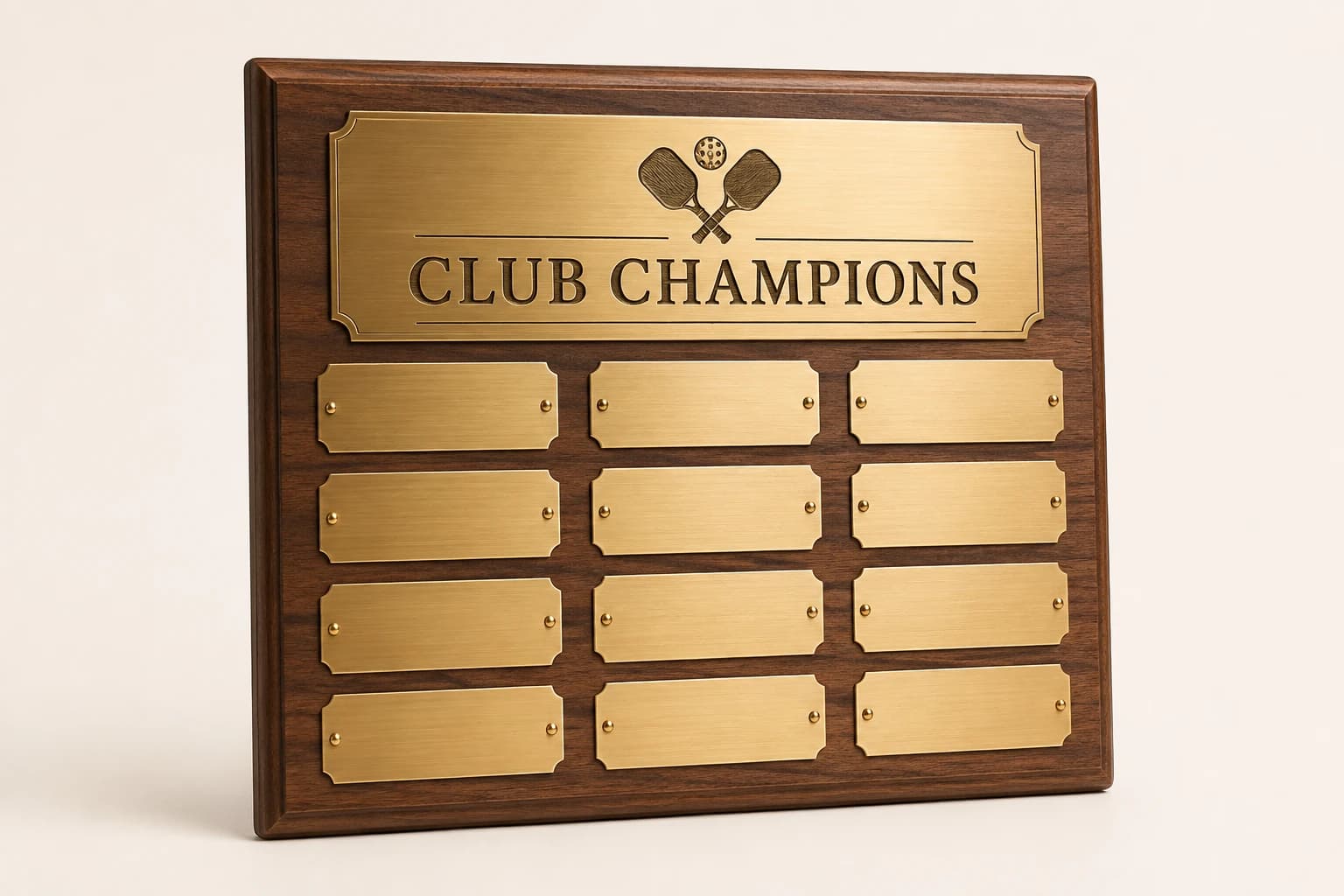
Make the personal piece meaningful on its own
A player's keepsake should make sense away from the shared trophy. Include the recognition details the club wants the recipient to remember, such as the event identity, season, placement and approved name treatment. A small decorative paddle with no context may be an intentional gift, but it serves a different purpose from a record of a specific championship.
For doubles, decide whether each personal piece names only its recipient, both partners or an approved team name. There is no need to hide the partnership simply because each person receives a separate object. Review the wording for the pair together while keeping each physical reference distinct for packing and any future replacement.
Choose the personal format around its intended display or use. A paddle-shaped plaque, a desk award and a tag are different design directions. The catalog concepts can help describe the appearance you like. Ask the proposal to specify the actual dimensions, material and attachments for the chosen use rather than treating the illustration as a finished technical specification.
Decide what the club display records each season
Define one history entry before designing a continuing display. It could be one season champion, one winning partnership or a separate entry for each division. Those choices determine how much text and how many entries the display needs over time. A board described as perpetual still needs a specific plan for its available space and update method.
Separate the permanent identity from changing results. The club name and competition title may stay in the main design, while season, division and winners belong in a changing area. Ask how the proposed construction supports that arrangement. Do not assume that a row of illustrated panels is a supplied removable-plate system or that the number of visible blank areas is its confirmed capacity.
Agree what happens when the planned space is used. The club might request an additional panel, a new display or another specifically designed extension, subject to a current proposal. Preserve the original dimensions and component references so that decision can be evaluated accurately later. A promise of unlimited future updates would leave the physical design undefined.
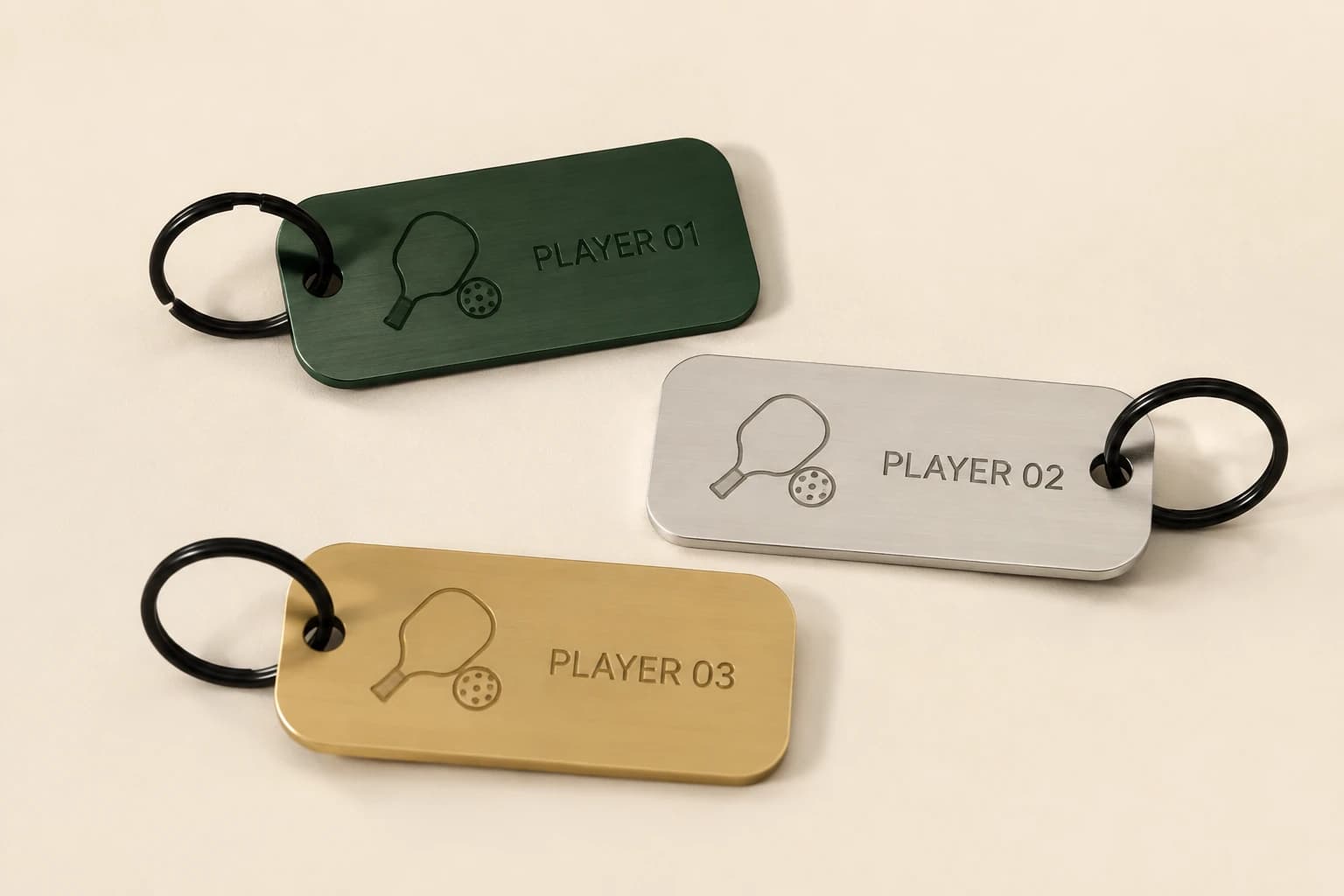
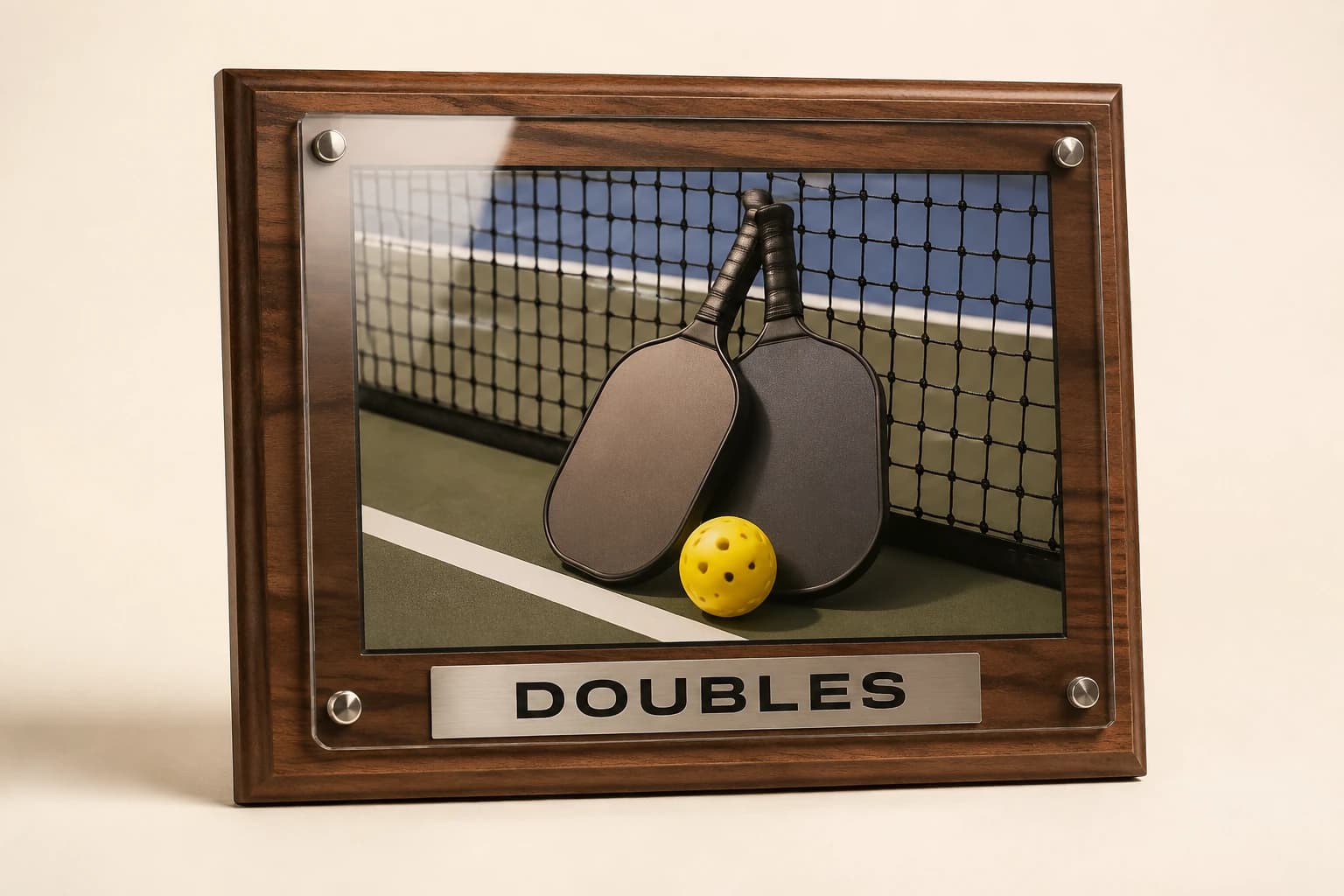
Illustrative order: twelve teams, twenty-four keepsakes, one display
Suppose a hypothetical club recognizes twelve doubles teams with one personal keepsake for each partner and also orders one separate club display. The personal inventory is 12 × 2 = 24 pieces. Adding the club display makes 25 physical objects. The example does not establish how many teams your competition should recognize; it demonstrates how to count the arrangement after the club chooses it.
If the object displayed at the ceremony is simply one of those twenty-four player keepsakes, the order remains twenty-four. If the club adds twelve shared team trophies as well as the twenty-four personal pieces and one organizational display, the order becomes 12 + 24 + 1 = 37 objects. These are different recognition plans, not alternative calculations for the same order.
Record the categories as separate lines in the quote request. Personal keepsakes, shared team trophies and the club display can have different dimensions, inscriptions and packing needs. A single grand total of thirty-seven would conceal those differences and leave the supplier to guess which objects are included.
Count the personal pieces and club display separately
Load the hypothetical twelve-team plan with two player keepsakes per team and one separate club display. Change the ownership arrangement before changing the count.
Method: Multiply the entered recognized teams by personal pieces per team, then add separately entered display pieces and spares. The tool does not assign ownership or infer future-season capacity.
Build your plan
Set spares yourself. This calculates the quantities you enter; it does not assume a recommended buffer.
Use the article’s example files
Download the illustrative working file and replace its sample entries with your approved project information. Review the article’s instructions before importing or releasing it for production.
Illustrative history capacity: entries are not always seasons
Imagine a proposed history area with twelve accepted entry positions. If the club uses one entry for each season, those positions describe twelve season entries. If it records three division champions separately each season, the same twelve positions describe four complete seasons of entries. This is layout arithmetic only; it does not claim a particular catalog board has twelve positions or that the text will fit them.
The actual design needs the intended text for each entry, the proposed dimensions and the update method. A long pair of names may require a different arrangement from one short team name. Review representative entries before approving the overall history layout, and keep the unit of record clear when discussing future capacity.
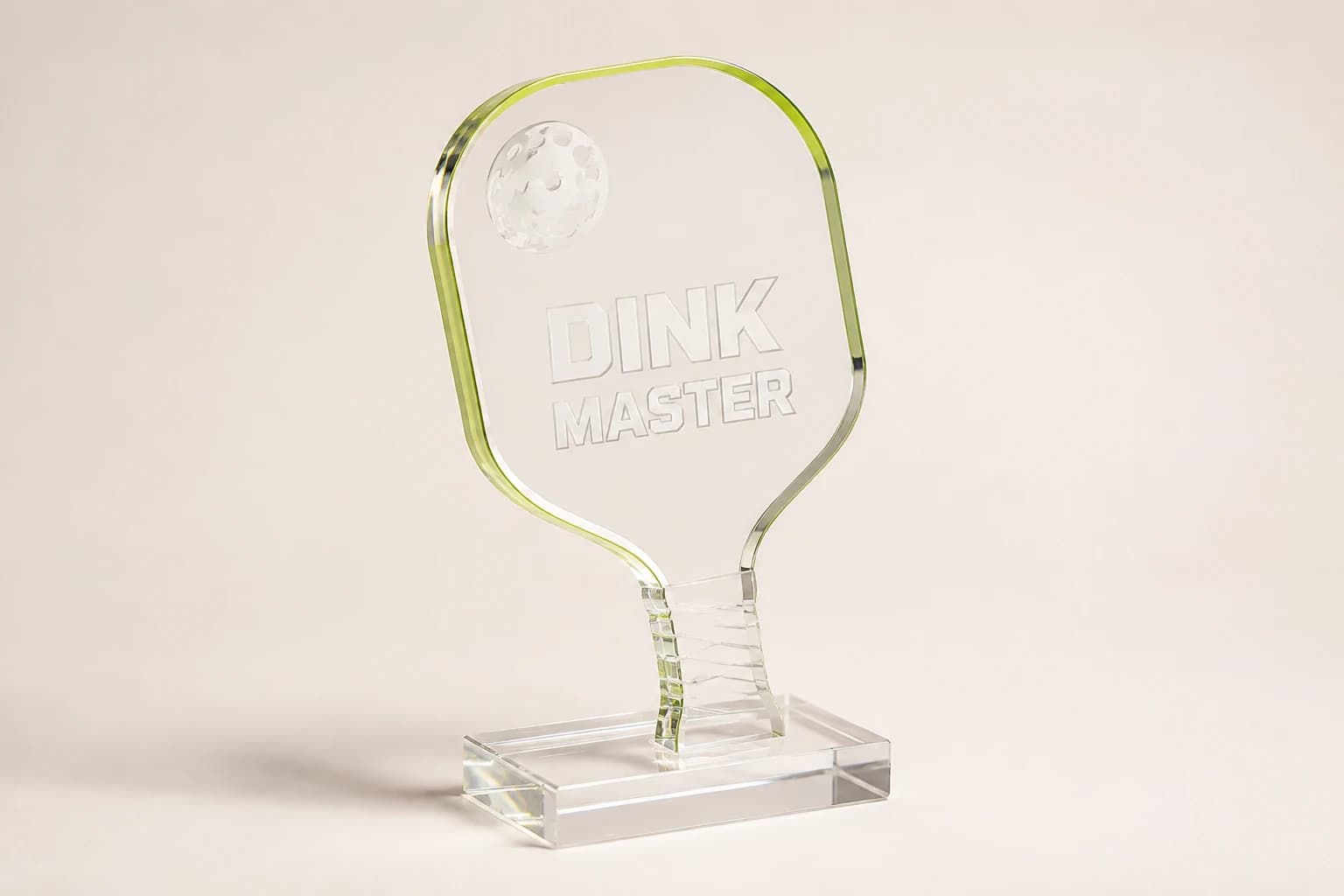
Keep the responsibilities distinct
Use this division of responsibility when preparing the event file, design brief and packing instructions.
| Option | The object should communicate | The club should decide |
|---|---|---|
| Permanent club display | The continuing identity of the competition and its approved history structure. | Display location, custodian, update owner and what one historical entry represents. |
| Traveling shared trophy | The recognition held by the current team under the chosen arrangement. | Who receives it, when it returns and how the club records the handoff. |
| Individual paddle keepsake | The player's personal connection to the event, season and partnership. | Exact recipient wording, intended use and a separate physical reference for each piece. |
| Shared team trophy | The partnership or team recognition in one object. | Which partner receives it and whether personal keepsakes are also included. |
| Future history component | A later approved entry that fits the specified update system. | The current result approver, component reference and accepted fitting arrangement. |
Retain the approved wording as well as the artwork
Adobe notes that outlined text loses the properties used by text-editing controls. Keep the accepted wording schedule and an appropriate editable design source alongside any outlined production artwork. That gives a later coordinator a clear way to request a new season entry without trying to recover text from letter shapes or a photograph.
Agree what design references and files will be retained or supplied as part of the order. File ownership, access and future editing work should be explicit in the commercial arrangement. A previous order does not automatically establish that every production file will be delivered or that later artwork changes are included at no additional charge.
For the club's own archive, keep the final approved inscription, the order reference, the display's construction details and the responsible contacts. Record corrections against that history instead of overwriting older entries silently. The purpose is a usable record of what the club approved, not an invented account of awards or results that did not occur.
Sources: Adobe: Create outline text in Illustrator on the web
Label for the ceremony and for ownership afterward
Separate club-owned objects from player-owned pieces in the packing instructions. Within the player group, keep each partnership easy to identify while maintaining individual references. If one partner is absent, the event coordinator should be able to identify that person's piece and follow the agreed collection or delivery plan without disturbing unrelated awards.
Include a receiving check before the presentation sequence. Compare the physical inventory with the approved ownership schedule and confirm that the club display has its intended recipient within the organization. Packaging labels can use internal references and handling instructions, while the engraved text stays limited to the approved recognition message.
Reconfirm the next season instead of copying it blindly
Before the next event, reconfirm which categories are recognized, whether the shared trophy's ownership arrangement still works and how many personal keepsakes are required. A club may change its divisions or presentation format even while preserving the same visual identity. Update the count and wording schedule to match that decision.
Use observations from the actual event to improve the next order: whether both partners received the intended pieces, whether the shared trophy returned to its agreed location and whether the history record was updated correctly. Those are specific operational facts the club can collect. They are more useful than assuming a particular design automatically creates a better event experience.
Shared and personal award questions
Who should keep a shared doubles trophy?
The club or team should decide before the presentation. State whether it belongs to a partner, remains with the club or travels under an agreed return arrangement. Personal keepsakes can give both players a separate item to retain.
Does a perpetual plaque include unlimited future entries?
No capacity or update system should be inferred from that description alone. Request the actual entry layout, construction and method for future additions, including what happens when the planned space is used.
Can the club display and player keepsakes look different?
Yes. They can share a design theme while giving different prominence to the competition history and the individual recipient. Approve both layouts together so the connection is intentional.
What should we save for reorders?
Retain the approved wording, order and design references, construction details, update method and the person responsible for the club record. Confirm the current result and commercial scope whenever a new entry or replacement is requested.
Explore the collection’s design direction
This existing narrated collection overview introduces the product designs. It provides visual background; the specific decision, comparison and worked example are in the article above. Images are original concepts rather than completed customer orders.
25-second overview
Count pickleball doubles and division awards accurately
Start with the divisions your pickleball event will run. Count each awarded placement and decide whether both doubles partners receive a piece. Keep partner names separate from division labels. Review long names, plan for late results and add volunteer awards as their own group. Reconcile the final quantity before sending the artwork and brief.
Prepare your brief and request a written quote.
Bring this decision into your design brief
Choose a relevant product direction and include the measurements, quantity, approved wording and delivery destination for your project. We can then develop a specific design and quote around those requirements.
Sources and scope
The sources below support the cited technical details. The ordering workflows are editorial recommendations. Your project specification, price and schedule are established in the written quote and approved proof.
- Adobe: Create outline text in Illustrator on the web · checked 2026-09-05
Which buying guide should you read next?
All buying guidesUse the director's approved division names as the inscription source. Keep event format, age label, skill label and placement separate until the final layout is approved, especially when brackets merge or names change.
Build an award matrix by event, division and placement, then multiply by the number of players receiving a piece. Decide explicitly whether both doubles partners receive awards. Keep division labels, partner names and event wording in separate fields so the total quantity and the personalization remain consistent.
Choose a trophy, medal or combined award plan around what each partner takes home, how the ceremony works and the actual packed proposal. Compare the same recipient count and included personalization.
Calculate the incremental pieces for an additional recognized bronze team without changing tournament rules, doubling all divisions, or treating generic spare awards as personalized replacements.