Paddle Court Awards · use case guide
How to count bronze ties in a pickleball awards order
When your tournament director's approved awards plan recognizes an additional bronze team, add the physical pieces promised to that team. For a doubles team receiving one award per player, that is two extra pieces. If the plan uses one shared trophy per team, it is one extra trophy. Apply the adjustment only to the affected divisions, then reconcile the bronze wording and packing list with the revised total.
Reviewed 2026-09-05 · AI-assisted editorial review. General buying guidance; illustrative scenarios are not customer case studies. Images are AI-generated concepts.
This is an ordering method, not a rule for deciding a tie or awarding a competition place. The tournament director must establish the results and recognition format. Do not infer a second bronze award from an unfinished bracket, an informal comment or another tournament's arrangement. Get the approved decision before changing personalized production instructions.
Define what one bronze result receives
USA Pickleball's Tournament Director Guide reminds organizers to order two medals per doubles team. For a custom trophy order, make the equivalent physical-piece decision explicit: one shared team object, one personal piece for each partner, or a combination. A bronze result is a placement entry; it does not by itself specify the number of objects in your custom order.
Write that choice next to every affected division. If both partners receive a personal award, do not use a single team name row to imply the quantity. If the team receives one shared trophy, identify who will receive it at the presentation and whether another keepsake is included. The object shown in a product concept can support the design discussion, but it does not decide the ownership arrangement for your tournament.


Keep the original order visible while calculating the change
Record the base order before adding the exception. For each division, list the recognized places, physical pieces per place, product direction and inscription status. Then add a separate adjustment line for the newly recognized team or recipient. This makes it clear whether a revised total is replacing an earlier order or adding to work that has already been quoted or approved.
Avoid sending only the new grand total. The production team also needs to know which award types increased. Four extra bronze pieces are not interchangeable with four extra gold pieces if the color, wording or design differs. A change note should identify the affected division, placement wording, number of pieces and relationship to the previous release version.
Keep participation, volunteer and sponsor recognition outside the placement subtotal. They may share the same delivery date, but they follow different counting rules. Separating them prevents an extra category gift from being mistaken for a spare tournament place or a correction to a competitive result.
Adjust the affected divisions individually
An exception in two divisions does not mean every division needs another bronze allocation. Use a division-by-division list from the director and mark the specific change. If one division awards a shared trophy and another awards individual partner pieces, calculate each adjustment using its own physical-piece rule.
Also check whether divisions were merged, renamed or canceled after the initial planning count. A revised competition structure can change both quantity and inscription. Do not carry an old age or skill label into the proof simply because its count was already in the spreadsheet. The approved event schedule should determine which division names are current.
When the decision is still pending, keep it as an unresolved line with an owner and a date for confirmation. Ask the production team what parts of the design can be prepared and which require the final decision. A provisional number can support planning, but it should not be presented as a released order for personalized bronze awards.
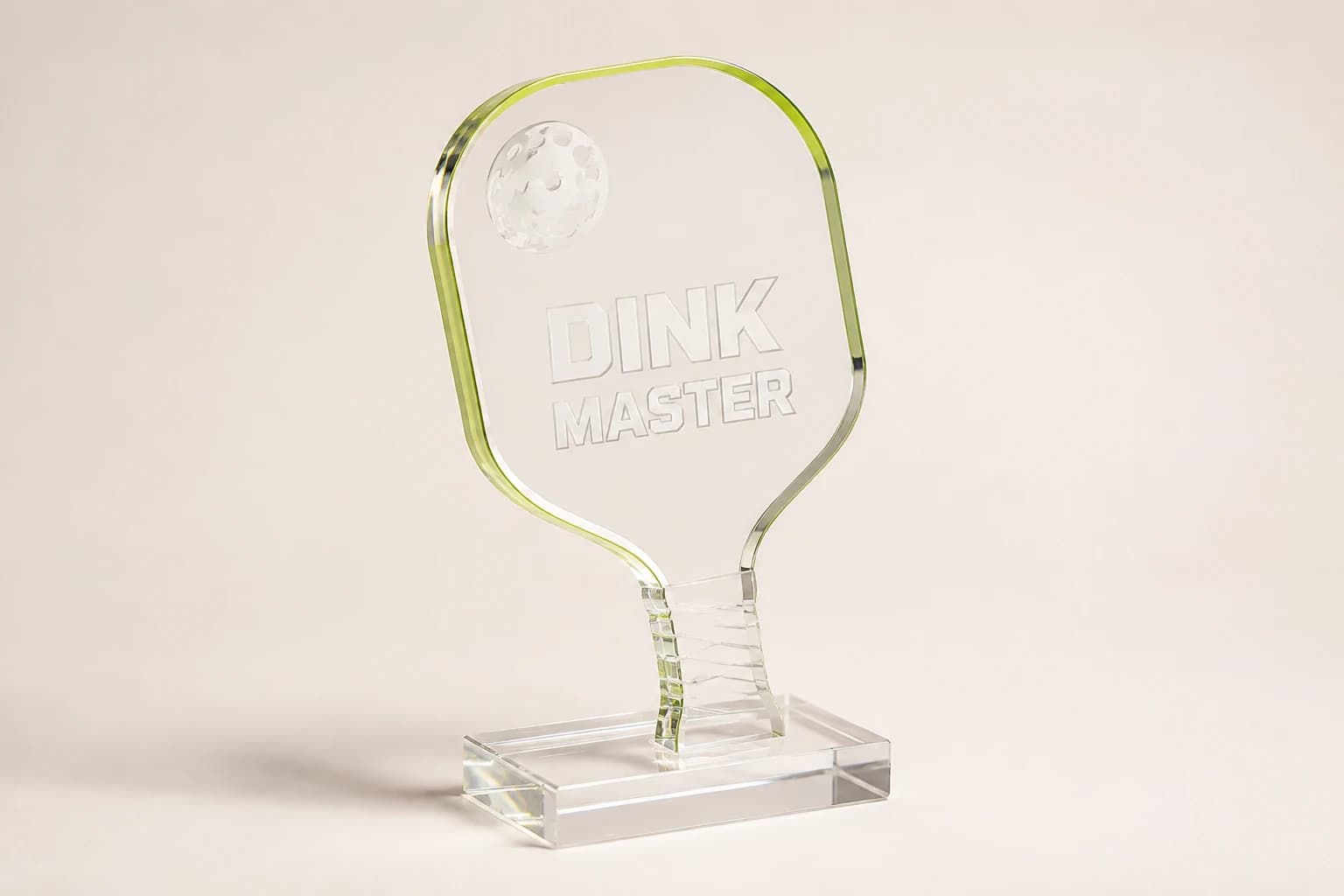
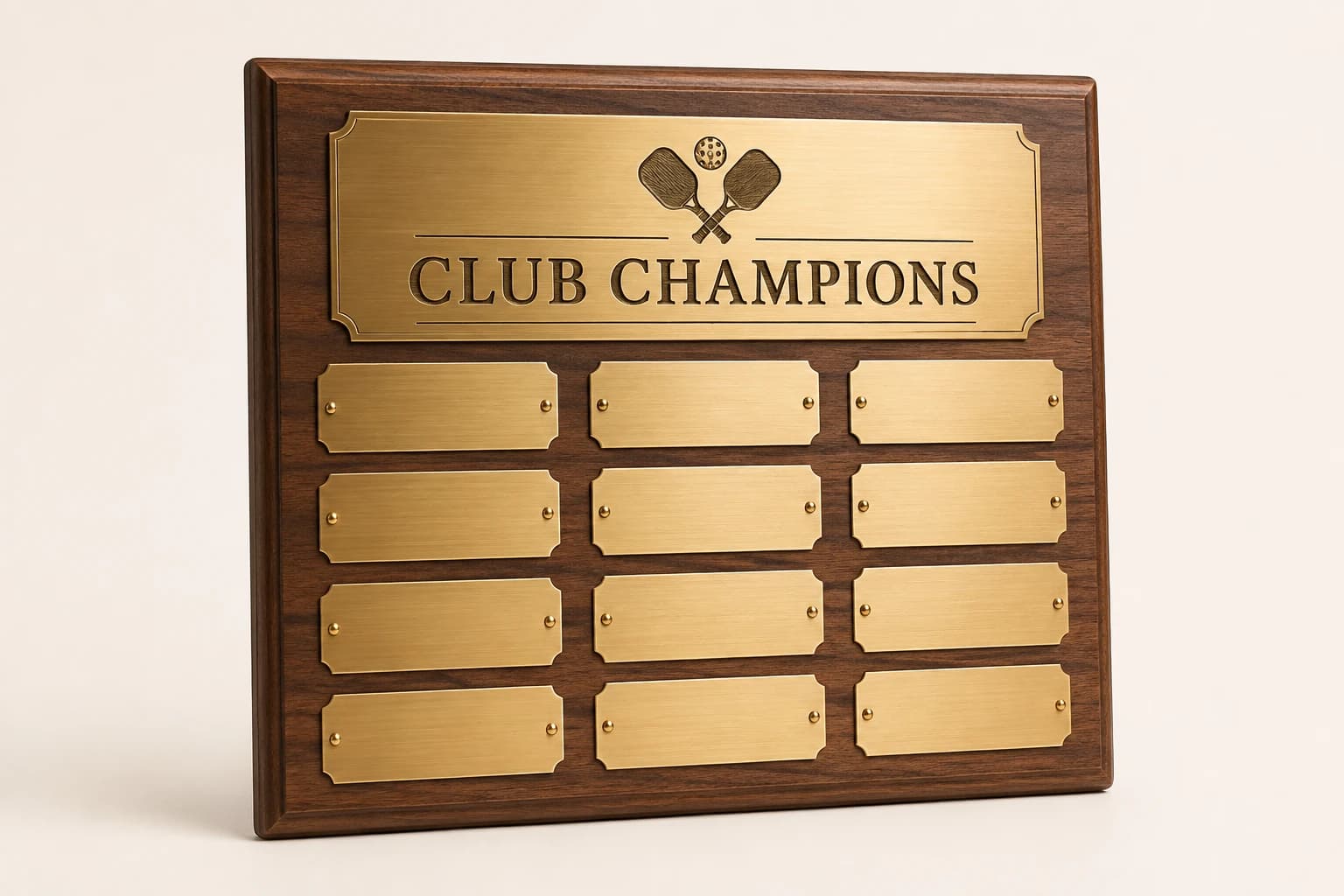
Illustrative example: six divisions and two extra bronze teams
Suppose an event's approved base plan has six doubles divisions, three recognized places in each division, and one personal award for each partner. Each division needs 3 × 2 = 6 pieces, so the base order is 6 × 6 = 36 pieces. This is a hypothetical recognition plan for arithmetic; it does not state a required format for your tournament.
Now suppose the director confirms an additional recognized bronze team in two of those divisions. Each additional team receives two personal awards. The adjustment is 2 × 2 = 4 pieces, making the revised total 36 + 4 = 40. Only the affected bronze allocations change. The example does not add another set of gold and silver awards or double the order for all six divisions.
If the same event instead uses one shared trophy per recognized team, its base order would be 6 × 3 = 18 trophies. Two additional bronze teams would add two trophies, for a total of 20. These are two different ownership plans. Do not compare their totals as if one simply includes a bulk discount; they recognize the players through different physical arrangements.
Calculate the approved awards adjustment
Load the hypothetical six-division order with two additional bronze teams receiving two pieces each. Replace the inputs with your director's approved award schedule.
Method: Multiply divisions by the entered awarded places times pieces per place, then add explicitly entered additional pieces and spares. It does not determine bracket outcomes, ties or competition rules.
Build your plan
For pairs or team prizes, include every individual piece in the per-division count. Use the quantity calculator for a separate participation batch.
Use the article’s example files
Download the illustrative working file and replace its sample entries with your approved project information. Review the article’s instructions before importing or releasing it for production.
Handle a mixed order without hiding the extra objects
A club might request a shared championship display and individual player keepsakes in the same shipment. Count those streams separately. In the forty-piece illustrative personal-award plan above, adding one separate club display creates a forty-one-piece order if that display is an additional object. If the display is merely one of the player awards placed on stage temporarily, it adds no piece.
Write the mixed order as separate lines with distinct product references. A club display may have different wording and a different owner from the player pieces. It also needs its own packing reference. Keeping it visible prevents the ceremony team from handing away the object intended to remain with the club or withholding a player's personal award as a display by mistake.
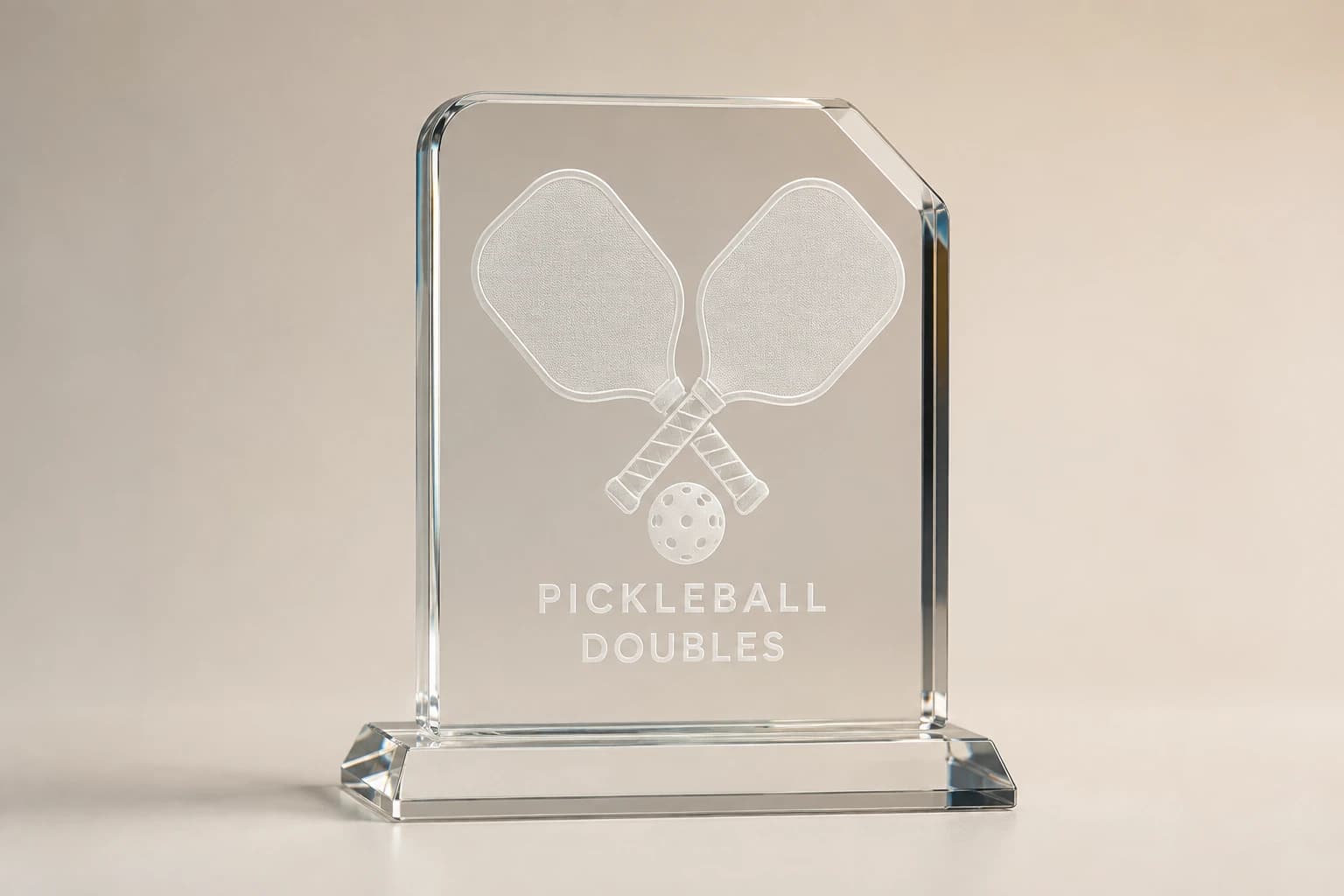
Translate the director's decision into the right order change
These are conditional quantity examples. The event's approved results and recognition policy determine which, if any, applies.
| Option | Change to physical inventory | Instruction needed with the change |
|---|---|---|
| One additional doubles team, personal pieces | Add two pieces when each partner receives one. | Identify the division, bronze wording and both recipient inscriptions if names are included. |
| One additional team, shared trophy | Add one shared trophy under that ownership plan. | Identify the team wording and who will receive the physical object. |
| Two affected divisions with personal pieces | Add four pieces if each division adds one doubles team. | Allocate two pieces to each affected division rather than a general unassigned extra line. |
| Blank contingency pieces | Add only the explicitly chosen spare quantity. | State which parts are blank and whether later personalization is part of the proposed construction. |
| Separate club display | Add one object only if it is separate from the recipient inventory. | Use a distinct ownership and packing reference so it stays with the intended organization. |
Review bronze wording separately from the count
Use the event organizer's approved placement language. Bronze, third place and a named recognition category may not be interchangeable in the program's communication. If more than one team is recognized, confirm how the wording should represent that decision. The awards supplier should not reinterpret the bracket or create a competition label that the director has not approved.
For named pieces, verify each partner's display name and the intended team relationship. Two personal awards may carry the same division and placement while using different recipient names. A shared award may need both names or a team name. Keep those layouts tied to the correct physical-piece references so the proof list can be reconciled without guessing which player receives which object.
Decide what can be known before play and what depends on the results. A category-only award can be specified differently from a winner-personalized piece. If you want names added later, ask for the actual proposed construction and production arrangement. Do not assume every trophy concept has a removable plate or that later work is automatically included.
Distinguish spare pieces from confirmed bronze additions
A confirmed additional bronze team belongs in the required order, not in a vague spare allowance. Spares serve a separately defined purpose and should be counted explicitly. A blank piece may be useful only if its design and personalization plan match the situation you are preparing for. A named award for one player does not become a ready replacement for another simply because it is physically available.
Ask the quote to distinguish required pieces, optional contingency pieces and any later personalization work. This makes the organizer's decision visible without implying that a certain spare percentage is universally appropriate. The number to reserve depends on what can remain generic, what is already known and how the event intends to handle changes.
Pack the revised order by division and presentation
The receiving list should show the base pieces and the confirmed additions under the correct division. For personal doubles awards, make the partner pair easy to identify while keeping each recipient's inscription visible on the packing reference. The presentation team should be able to find the additional bronze allocation without opening every package or relying on the person who placed the original order.
Before the ceremony, reconcile the physical pieces against the final award schedule. Keep the released version with the event coordinator and note any unresolved discrepancy before the presentation sequence begins. After the event, retain the final counts and wording references for the next tournament, but reconfirm the new event's divisions and recognition rules rather than copying an old exception into a new order.
Bronze-order questions
Does pickleball always award two bronze teams?
This guide does not establish a competition rule or a universal bronze format. Use the tournament director's approved results and recognition policy. The quantity method applies only when that plan actually recognizes an additional team or recipient.
How many extra awards does another doubles team need?
Two when each partner receives one personal piece, or one when the team receives a single shared trophy. If the plan includes both, count all three physical objects explicitly.
Can I cover the change with spare trophies?
Only if the spare construction and wording actually suit the confirmed award. Treat a required additional bronze allocation as required inventory. A generic spare count does not establish that the necessary personalization is already available.
What should a last-minute change request include?
Reference the earlier order version, affected division, exact placement wording, added quantity and approved recipient text if used. Ask what can change at the current production stage and confirm the revised delivery arrangement in the quote.
Explore the collection’s design direction
This existing narrated collection overview introduces the product designs. It provides visual background; the specific decision, comparison and worked example are in the article above. Images are original concepts rather than completed customer orders.
25-second overview
Count pickleball doubles and division awards accurately
Start with the divisions your pickleball event will run. Count each awarded placement and decide whether both doubles partners receive a piece. Keep partner names separate from division labels. Review long names, plan for late results and add volunteer awards as their own group. Reconcile the final quantity before sending the artwork and brief.
Prepare your brief and request a written quote.
Bring this decision into your design brief
Choose a relevant product direction and include the measurements, quantity, approved wording and delivery destination for your project. We can then develop a specific design and quote around those requirements.
Sources and scope
The sources below support the cited technical details. The ordering workflows are editorial recommendations. Your project specification, price and schedule are established in the written quote and approved proof.
- USA Pickleball: Tournament Director Guide · checked 2026-09-05
Which buying guide should you read next?
All buying guidesUse the director's approved division names as the inscription source. Keep event format, age label, skill label and placement separate until the final layout is approved, especially when brackets merge or names change.
Build an award matrix by event, division and placement, then multiply by the number of players receiving a piece. Decide explicitly whether both doubles partners receive awards. Keep division labels, partner names and event wording in separate fields so the total quantity and the personalization remain consistent.
Choose a trophy, medal or combined award plan around what each partner takes home, how the ceremony works and the actual packed proposal. Compare the same recipient count and included personalization.
Count awards from the divisions and placements you will recognize, including both players when doubles partners each receive a piece. Separate player awards from shared trophies, then group the order by presentation session and receiving destination. Keep winner names distinct from division labels.