Paddle Court Awards · specification guide
Order pickleball awards for an international tournament
Count awards from the divisions and placements you will recognize, including both players when doubles partners each receive a piece. Separate player awards from shared trophies, then group the order by presentation session and receiving destination. Keep winner names distinct from division labels.
Reviewed 2026-09-05 · AI-assisted editorial review. General buying guidance; illustrative scenarios are not customer case studies. Images are AI-generated concepts.
Choose the construction before counting the shipment
A doubles title describes a pair, but the purchasing unit depends on the ceremony plan. A paddle-shaped trophy, a medal and a shared club display solve different presentation needs. Decide whether each partner keeps a piece before comparing the unit estimates. For a tournament with several skill or age divisions, preserve the organizer's exact division labels. A short label that fits the trophy should still match the published results and the host's announcement.


A worked quantity example
Illustrative order: four doubles divisions recognize three placements, with two players receiving a piece per placement. The base order is 4 × 3 × 2 = 24 player awards. Add one shared club trophy only if the event actually wants that additional presentation. If bronze goes to two tied teams, add two more player pieces for each affected division; do not silently treat the tie as a single third-place award. This worksheet is an arithmetic example, not a tournament rule or a report of a completed event.
Compare relevant design starting points
The catalog offers different starting points for this brief. Compare the intended use and proposed specification below, then ask which construction and included components fit your own receiving and display plan. These are design proposals, not measured packed goods.
| Option | Intended use | Proposed material and size | Personalization |
|---|---|---|---|
| Doubles Paddle Trophy | Give both partners their moment. Two paddle shapes and a pickleball centerpiece frame the players' names, with separate space for the event, division and finish. | Layered acrylic and metal. 10 in tall | Player one; Player two; Event; Division; Placement; Year |
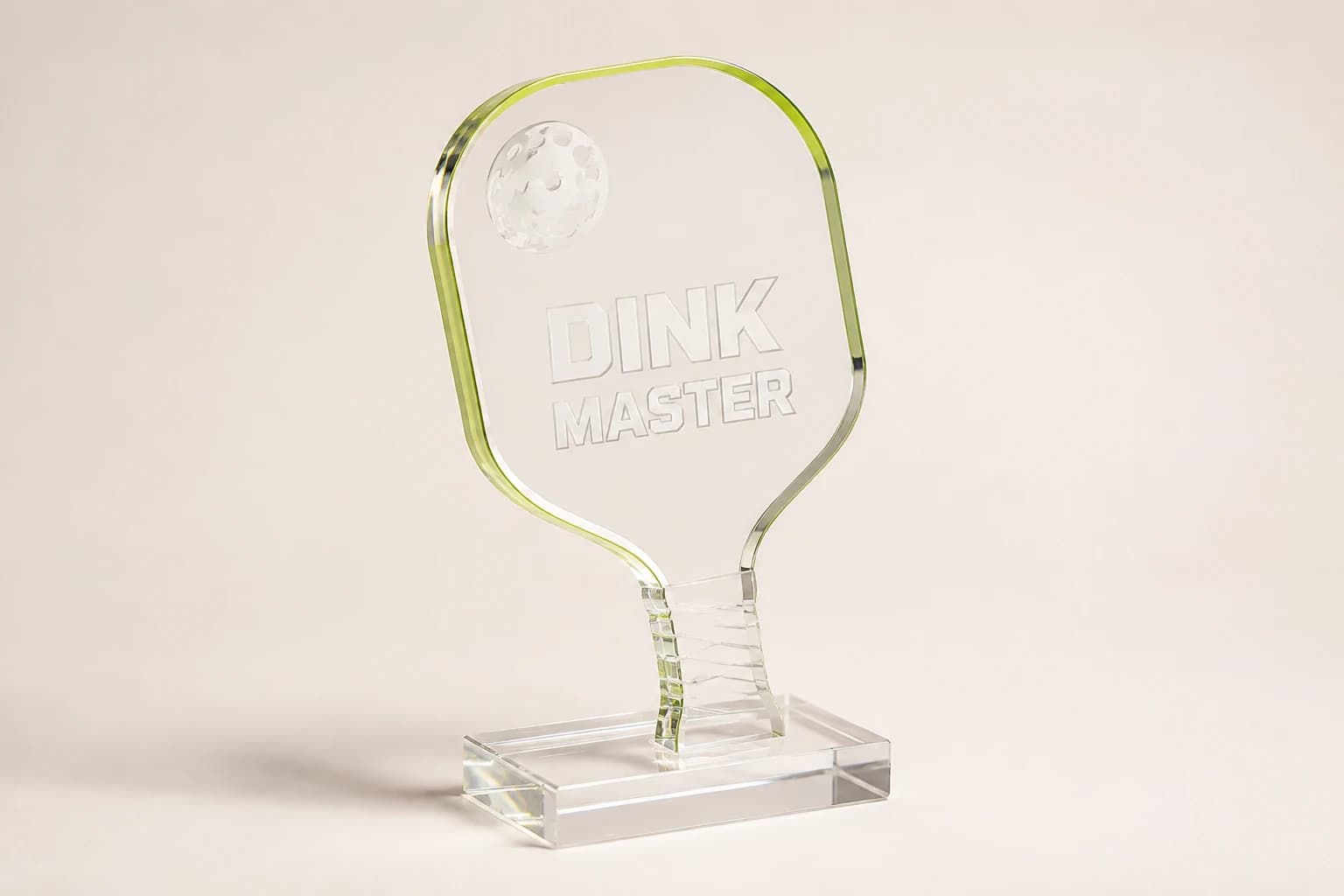
| Dink Master Acrylic Award | Celebrate the player who makes the soft game count. The Dink Master award gives a playful skill title a clear acrylic display that fits on a desk or trophy shelf. | Clear optical acrylic. 8" H x 5" W | Player; Title; Club; Year |
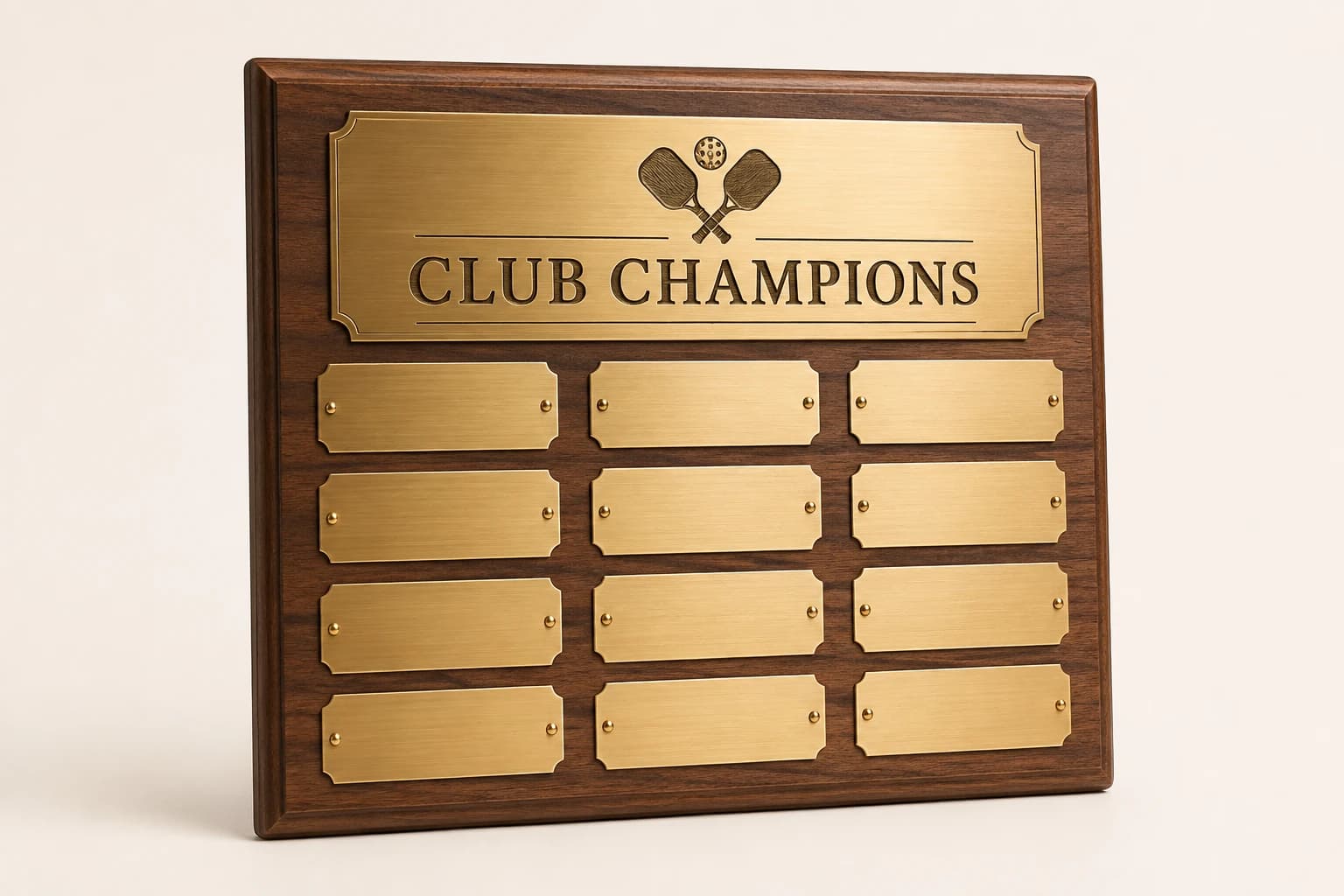
| Perpetual Pickleball Championship Plaque | Give every season's champions a place in the club's history. A perpetual plaque separates the event title from the names and years that change. | Walnut with metal plates. 15" x 12" | Board title; Year; Player one; Player two; Division |
| Clear Acrylic Pickleball Award | Keep the result simple and the names easy to read. This acrylic pickleball award pairs the game motif with division, placement and player details. | Clear acrylic. 8" H | Player one; Player two; Division; Placement; Event |
When to consider Doubles Paddle Trophy
Choose one shared team trophy or matching pieces so each partner has something to take home. For a tournament order, keep the design consistent across divisions and change the placement and player lines instead of crowding every category onto one piece.
Example layout fields: Player one: Alex Rivera; Player two: Jamie Chen; Event: Autumn Doubles Open; Division: Mixed Doubles; Placement: Champions; Year: 2026. The names and wording are illustrative. Open this design from the collection to replace them with your approved information.
When to consider Dink Master Acrylic Award
Choose this for a club recognition, friendly challenge or skill award. If it is part of an official tournament presentation, add the event and division so the playful title sits alongside a result the recipient understands.
Example layout fields: Player: Taylor Morgan; Title: Dink Master; Club: The Weekend Rally Club; Year: 2026. The names and wording are illustrative. Open this design from the collection to replace them with your approved information.
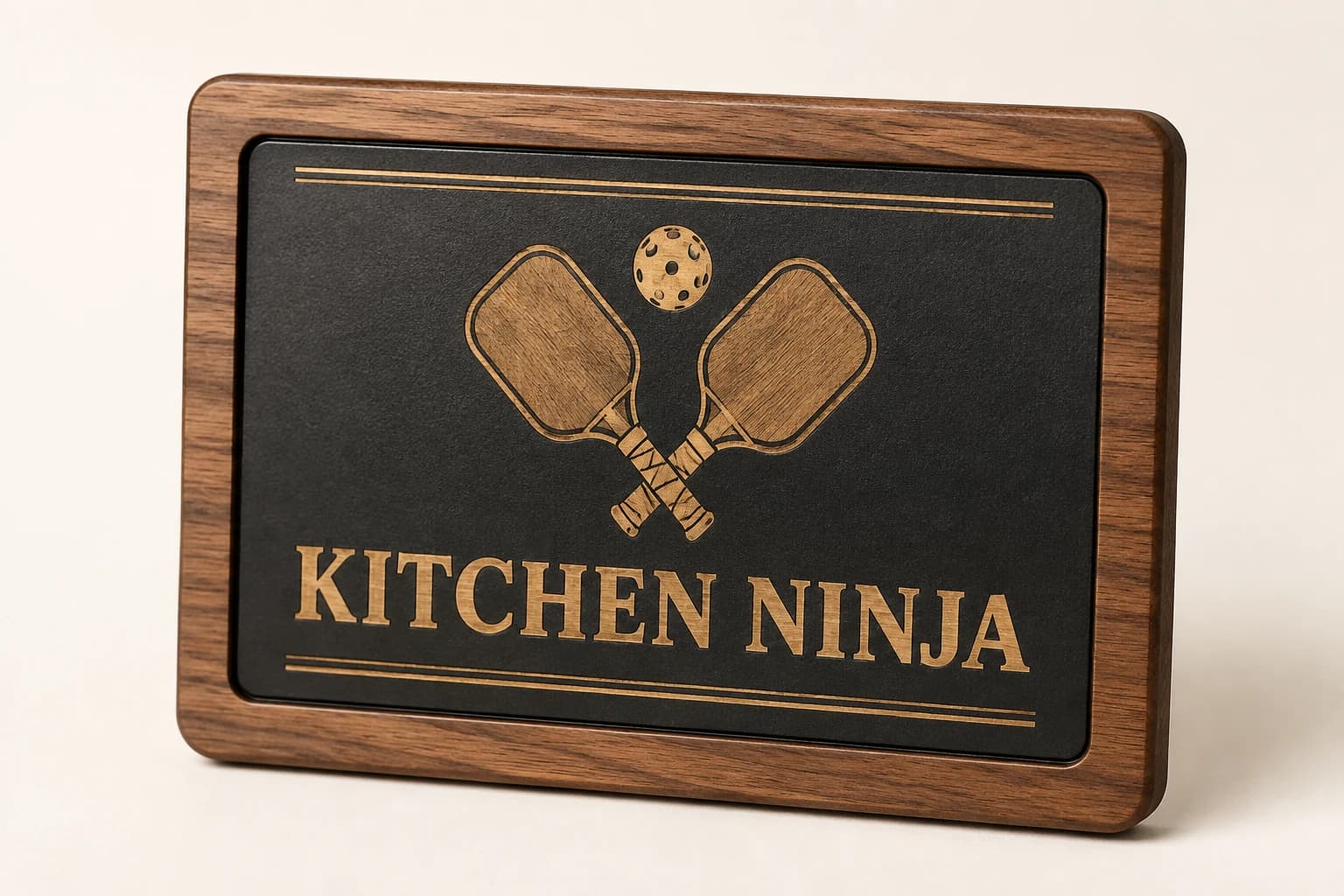
When to consider Perpetual Pickleball Championship Plaque
For doubles, reserve an entry wide enough for two names from the start. Decide whether separate divisions will share the board or have their own plaques before allocating spaces for future winners.
Example layout fields: Board title: Annual Doubles Champions; Year: 2026; Player one: Sam Reed; Player two: Casey Lee; Division: Open Doubles. The names and wording are illustrative. Open this design from the collection to replace them with your approved information.
When to consider Clear Acrylic Pickleball Award
Choose it for an individual keepsake or a coordinated set of division prizes. A short inscription works well on the clear face; use a larger plaque when you want a longer dedication or a full team roster.
Example layout fields: Player one: Jordan Lane; Player two: Quinn Hayes; Division: Mixed Doubles; Placement: Silver; Event: Autumn Open 2026. The names and wording are illustrative. Open this design from the collection to replace them with your approved information.
Keep the piece count separate from the delivery plan
Use division label, placement, players per awarded team, presentation session as the project-specific headings in the specification file. Add a stable row reference, the quantity of physical pieces and a receiving group. If two pieces share artwork but go to different destinations, keep separate delivery rows. If one person intentionally receives two different awards or signs, preserve both product rows. Repeated names alone are not an error.
The worksheet below totals the pieces you enter and reconciles them by receiving reference. It does not infer how many packages will be needed. One large assembly can require more than one package, and several small pieces may share a package when the final packing plan permits it. Ask for the packed dimensions, weights and component list after the construction is settled. Keep the receiving group names consistent; two slightly different labels are treated as two groups.
Use one controlling unit on the drawing
One inch equals exactly 25.4 millimeters. The worksheet converts entered width and height using that relationship and keeps the original values visible. A converted display is a convenience for review; it does not create a fabrication tolerance or certify physical fit.
Specify whether a measurement describes the overall assembly, the visible face, the engraving area or an opening in an existing holder. Include thickness, depth, hole spacing and support clearances separately when they matter. Do not round a metric opening into a convenient inch size and assume the fit is unchanged. Identify which drawing and measurement control when two references disagree, and have the responsible project contact resolve that disagreement before the proof is released.
Sources: NIST: SI units: length
Proof names and language without changing their meaning
Personal naming conventions vary across cultures. Keep the exact display text supplied by the person approving it, including accents, punctuation and name order. A shipping contact may use a different form of the name from the inscription; the artwork should not be overwritten by an address record.
For several languages, provide each approved version rather than asking the production file to translate itself. Review the longest lines, the intended reading order and any script-specific layout in the actual proof. A typed sample is useful for wording approval, but it does not establish which font or marking method will reproduce it clearly. Use an unambiguous written date or identify the intended numeric date convention. Keep the accepted text and proof revision together so later edits can be traced.
Sources: W3C: Personal names around the world
Reconcile the quantities and prepare a private brief
Enter groups of matching pieces below. Add a receiving reference and optional width and height, then review the total and the unresolved quote details. The examples above are illustrative; replace them with your own order information. No automatic spares, discounts, freight costs or delivery promises are added.
Method: Sum positive whole-piece quantities, group by the exact receiving reference and convert optional dimensions using 25.4 millimeters per inch. No spare pieces are inferred. Display conversions use at most four decimal places and do not establish manufacturing tolerances. Customs, freight, origin and arrival timing remain quote questions.
Build your international order brief
Add groups of pieces sharing a specification and receiving destination. Use an office, venue or country reference here; street addresses are not needed for this planning step. Quantities are pieces, and delivery groups are not parcel counts.
Compare the complete written order, in a stated currency
Ask each option to identify the product quantity and what is included: personalization, new artwork, tooling, presentation packaging, mounting parts or assembly work. Keep one-time charges separate from recurring piece charges so a future reorder can be discussed accurately. A starting price for a small component is not the price of a complete display. Compare the alternatives against the same approved brief before deciding that one total represents a saving.
Record the currency code next to each quoted amount. Do not combine a product estimate in one currency with a freight amount in another without an explicit conversion source and date. Ask the quote to state the freight service, any quoted import charges and the party responsible for charges that are not included. The worksheet records your requested arrangement, which still needs written confirmation. It calculates no selling price, exchange rate, tax rate or customs charge.
Confirm shipment details for the actual destination
Commercial invoices identify goods, quantities and values. Ask the shipping contact to confirm the accurate product descriptions, origin information and other documentation required for the particular shipment. This guide and its worksheet are planning aids, not customs declarations.
Give the quoting team the receiving country and the actual destination details through the order process. Confirm the ship-from location, the available service and who will answer delivery or import questions. Do not infer the origin of the goods from the storefront name or assume that an event gift has no reportable value. Keep production completion, carrier transit and the requested in-hand date as separate milestones in the written plan. The receiving date you enter below is a request, not a calculated arrival commitment.
Prepare the handoff and the receiving check
Label each group by division, placement and session so the host can find both partners' pieces together. Use a separate row for event staff or sponsor recognition. If players will carry the awards home, compare the proposed presentation package with their travel plans. The receiving deadline should allow the organizer to reconcile all pairs before the first awards session.
Before distribution, match the delivered piece references and component counts to the approved schedule. Check the wording against the accepted proof and keep the packaging while any discrepancy is being reviewed. Identify the affected row, proof revision and photographs when requesting help. Preserve the order record for replacements or a repeat event; a later order still needs its own confirmed specification, price and schedule.
Collection planning overview
This existing narrated collection overview provides background for the design choice. Use the international worksheet and the receiving schedule in this guide for the delivery brief. The visuals are original design concepts rather than footage of completed shipments.
25-second overview
Count pickleball doubles and division awards accurately
Start with the divisions your pickleball event will run. Count each awarded placement and decide whether both doubles partners receive a piece. Keep partner names separate from division labels. Review long names, plan for late results and add volunteer awards as their own group. Reconcile the final quantity before sending the artwork and brief.
Prepare your brief and request a written quote.
Questions before the order is released
Does one delivery group mean one parcel?
No. A delivery group connects pieces to a receiver or location. The final construction, packed dimensions and protection determine the package plan. Ask for the actual parcel or freight details in the quote.
Does entering a country confirm delivery service?
No. The worksheet records the destination you want quoted. The order team confirms service for the actual address, shipping arrangements and timing in the written quote.
Will the worksheet add spare pieces or discounts?
No. It adds only the quantities you enter. Create an explicit spare-pieces row if you want extras, and keep personalized pieces separate from blanks. Any discount belongs in the written quote.
Which project details should accompany this brief?
Include division label; placement; players per awarded team; presentation session. Keep the exact approved text and the physical specification linked to a stable row reference, then identify the receiving group for each piece.
Turn the schedule into a specific quote request
Choose a design, reconcile the physical pieces and include the decisions that remain open. The quote team can then review the construction, artwork, packing and delivery requirements as one defined project. Save the worksheet result with your approved source files so a later change can be applied to the correct group.
Sources and scope
The sources below support the cited technical details. The ordering workflows are editorial recommendations. Your project specification, price and schedule are established in the written quote and approved proof.
- NIST: SI units: length · checked 2026-09-05
- W3C: Personal names around the world · checked 2026-09-05
- UPS: How to create a commercial invoice · checked 2026-09-05
Which buying guide should you read next?
All buying guidesUse the director's approved division names as the inscription source. Keep event format, age label, skill label and placement separate until the final layout is approved, especially when brackets merge or names change.
Build an award matrix by event, division and placement, then multiply by the number of players receiving a piece. Decide explicitly whether both doubles partners receive awards. Keep division labels, partner names and event wording in separate fields so the total quantity and the personalization remain consistent.
Choose a trophy, medal or combined award plan around what each partner takes home, how the ceremony works and the actual packed proposal. Compare the same recipient count and included personalization.
Calculate the incremental pieces for an additional recognized bronze team without changing tournament rules, doubling all divisions, or treating generic spare awards as personalized replacements.