Paddle Court Awards · comparison
Pre-event category awards versus winner personalization
Choose a pre-event category award when the approved event, division and placement wording is enough for the presentation. Choose later winner personalization when names or result details are essential and will only be confirmed after play. A design with a later-added component is another option to request, but its construction and production arrangement need to be specified in the quote. The right plan depends on when the exact text becomes available and when the finished piece must reach its recipient.
Reviewed 2026-09-05 · AI-assisted editorial review. General buying guidance; illustrative scenarios are not customer case studies. Images are AI-generated concepts.
Separate the ceremony date from the date each player must receive the final personalized object. Those dates can be the same, but they do not have to be. Making that choice early allows the organizer to compare real alternatives instead of discovering after production that the desired winner names were unavailable at the release deadline.
Sort the wording by when it becomes reliable
List the fields that can be approved before the tournament, such as the event identity, year and planned category wording. Then list the fields that depend on confirmed results, such as winner names or a final placement assignment. Keep any division label that may change during bracket planning marked as provisional until the director approves it.
A field is not ready simply because someone can fill it with plausible text. A draft bracket name, a likely winner or a placeholder team name should not sit in the same production field as an approved inscription without a visible status. Use a clear release status and an owner for each unresolved item so the design team knows what can be used and what must wait.
For doubles, identify whether the final text needs both partners' names, a shared team name or separate personal inscriptions. One result can generate two different name fields for personal pieces. The organizer should decide that treatment before the results file arrives, so the final names can be placed into an already-defined layout.


Make the pre-event award a complete design
A category-only award can be intentionally complete. It might recognize the event, division, placement and year without naming the winner. If that is the chosen arrangement, approve it as the finished piece rather than leaving a blank area that implies a missing name. Tell the ceremony team what the award communicates so the presentation matches the design.
This option still needs a reliable category schedule. If age or skill divisions may merge, the organizer must decide which wording can be released before play and which should remain open. Preparing awards early does not eliminate content approval; it changes which content the organizer chooses to include.
Ask for the complete physical count by category and the presentation packaging required. A category-only inscription can repeat across a partner pair, but it does not turn two personal awards into one object. Keep the physical quantity explicit even when the artwork is identical.
Plan the post-event handoff as part of the order
For winner-personalized pieces, identify who supplies the final results and who approves the exact display names. Decide how an absent partner or a corrected spelling will be handled before the file is released. The production team needs a controlled recipient schedule, not a set of photographs from the medal stand or a link to an evolving results page with no approval instruction.
Agree where the finished awards will go after personalization. They might return to the organizer for a club presentation or be sent to separately confirmed recipients under an agreed fulfillment arrangement. Keep the receiving information connected to the award references while limiting the production file to the details needed for the job.
Communicate the chosen handoff to players through the event's normal channels. The physical presentation and later delivery should be understandable as one recognition plan. Do not let a provisional display piece create the impression that a different personalized object is already complete or ready for collection.
Request later updates as a specified construction
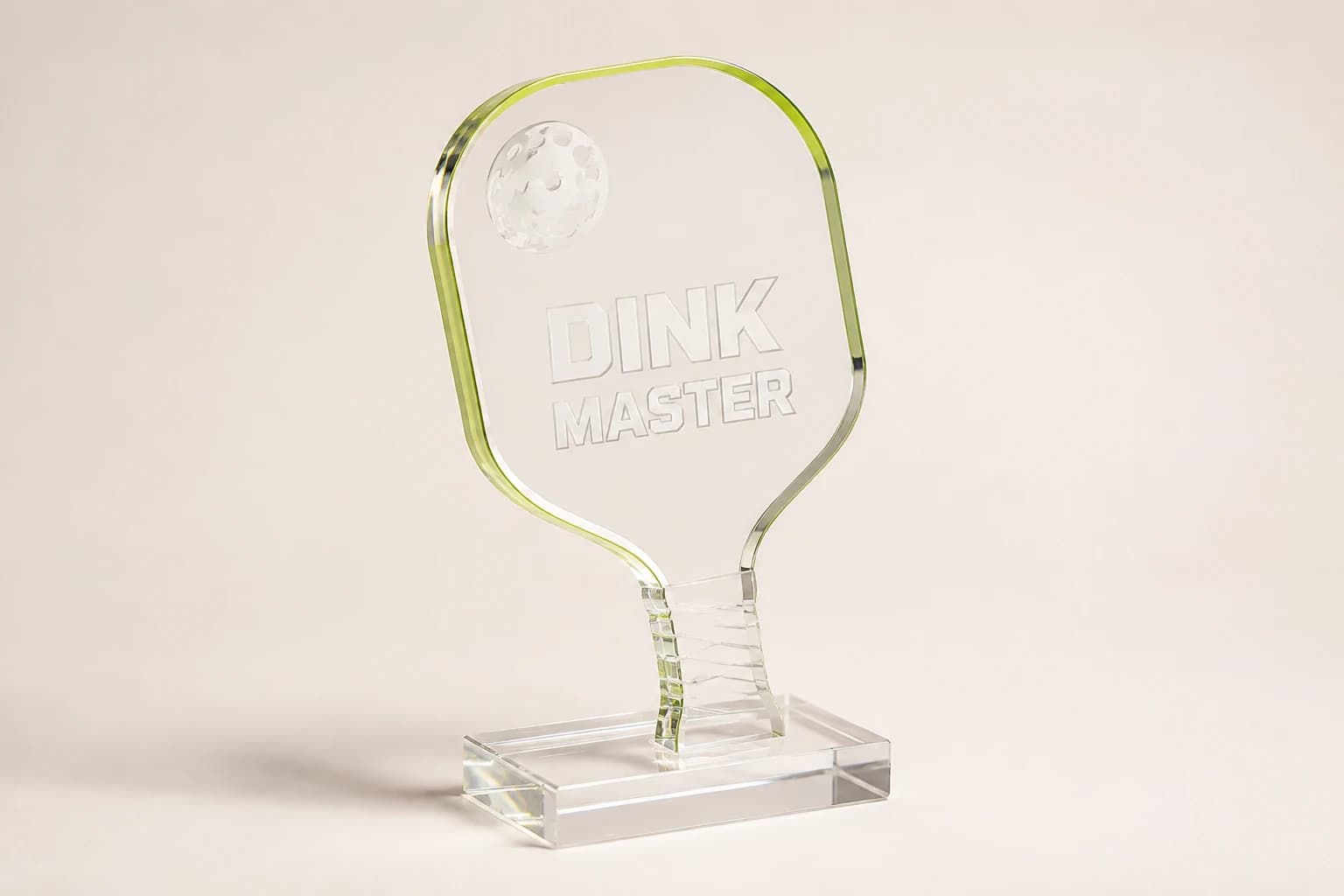
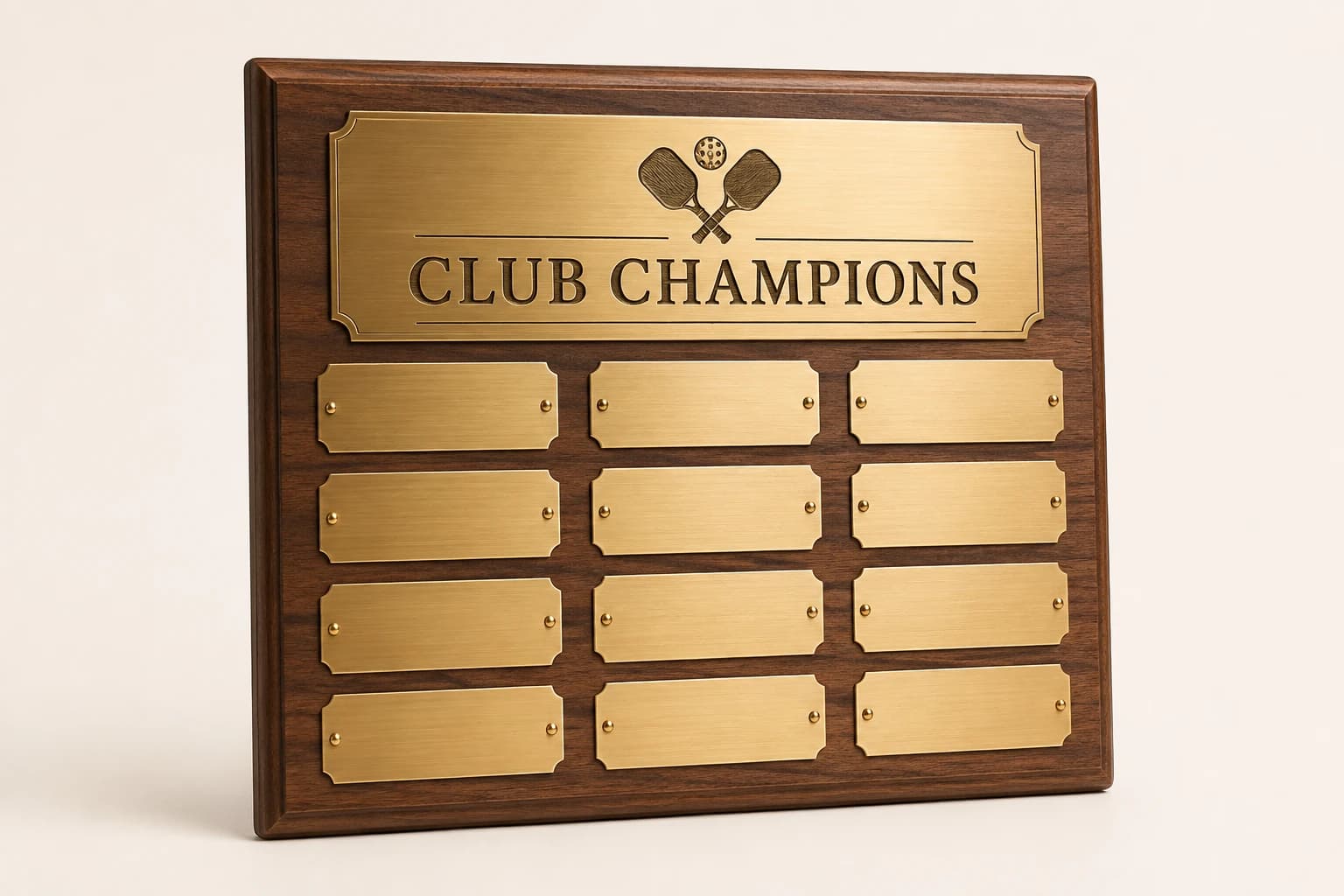
If you want a plate, insert or other element added after the event, describe that requirement when requesting the design. Ask what the proposed component is, how its dimensions relate to the retained object, who fits it and which parts of the work are included. An illustration of a plaque on a base does not prove that it is removable or intended for later replacement.
Identify the appearance expected before the update and after it. A presentation object with an intentionally blank dedication area may need a different ceremony treatment from a finished category-only award. Review both states if both are part of the plan. The quote should make clear whether it covers one complete delivery or separate stages.
Keep any fitting or installation responsibility explicit. If the organizer is expected to add a component, request the agreed method and confirm the received components against the approved design. Do not improvise a change to the finished award because the original brief left the update arrangement unresolved.
Work backward from your required arrival
Load the hypothetical October schedule, then use stage durations confirmed for your actual proposal. The dates are planning arithmetic, not reserved production or a delivery promise.
Method: Subtract entered receiving, transit, production and proof allowances from the requested arrival date, skipping weekends. Holidays, customs, carrier cutoffs and available production capacity are not modeled.
Build your plan
Work backwards from arrival using your entered stage durations. Weekends are skipped; holidays and closures require extra allowance. Dates describe a plan, not reserved production capacity.
Use the article’s example files
Download the illustrative working file and replace its sample entries with your approved project information. Review the article’s instructions before importing or releasing it for production.
Illustrative schedule: names arrive after the planned release
Suppose a hypothetical order must arrive on Friday, October 16, 2026. Enter two business days for receiving allowance, three for transit, five for production and two for proof review. Skipping weekends only, the worksheet places receiving allowance on October 14, dispatch on October 9, production start on October 2 and the beginning of proof review on September 30. These are assumed planning durations, not a quote or a promise of available capacity.
Now suppose final winner names will only be approved on October 13. That date falls after the example's planned dispatch and production start. The schedule therefore does not support the original plan of including those names within the entered stages and arrival date. The useful result is the mismatch itself; changing the name field in a spreadsheet does not resolve it.
Possible revisions include using an intentionally complete category award, arranging later personalized delivery, requesting a specifically designed two-stage object, or asking for a different confirmed production and shipping proposal. Evaluate each with actual dates and scope. A rush request should be assessed against the new written plan rather than assumed to erase every stage in the example.
Compare the release options
Choose the option that matches the information available and the recipient experience you intend to provide.
| Option | Information needed at release | What to include in the proposal |
|---|---|---|
| Complete pre-event category award | Approved event, category, placement and any other fixed wording selected for the finished piece. | The complete count, final appearance and presentation arrangement, with no implied missing winner text. |
| Winner-personalized award after results | Confirmed recipient names and result-dependent wording, plus the accepted layout. | Who approves the results file and where each finished award goes afterward. |
| Specifically designed later update | The first-stage design and the agreed fields to be supplied later. | Component construction, fitting responsibility, separate release dates and the included work at each stage. |
| Shared event display plus later keepsakes | Approved display wording now and the required recipient details later. | Separate ownership and physical counts for the display object and the personal pieces. |
Keep editable text beside the approved appearance
Adobe documents that converting text to outlines removes its text properties, so it cannot then be edited with text controls. If your designer uses outlined artwork for a production handoff, retain the approved wording and an appropriate editable source separately. A visually correct file may not be the convenient place to insert the next winner's name.
Agree which file is the reusable design reference and which file is the exact approved release for this order. Preserve the text schedule with that release. For a later update, use the same reference structure and provide the new wording explicitly rather than asking someone to recover names by inspecting letter shapes in an old image.
Sources: Adobe: Create outline text in Illustrator on the web
Make a late change specific enough to evaluate
A useful change request identifies the award reference, old wording, replacement wording and whether the physical count changes. State which release version it supersedes. The production team can then explain what is still possible at the current stage and whether the change affects the proposal. A message saying the winner changed leaves too much unresolved.
Reconcile approved changes back into the recipient and packing schedules. If a partner's display name is corrected, update the intended inscription and any distribution label that uses it. Keep the final record aligned with what was actually approved, so a future replacement request does not repeat the earlier draft.
Personalization timing questions
Can we prepare awards before we know the winners?
Yes, you can request complete category-only awards or prepare a design whose final personalized release happens later. Identify which wording is approved now and which depends on results. The quote should describe the actual staged arrangement.
Can any trophy have names added later?
Do not assume that from a concept image. Request the specific construction, component and fitting arrangement, including what work is included and when each stage is released.
Does the timeline calculator guarantee arrival?
No. It works backward using the durations you enter and skips weekends. Use current confirmed production and shipping inputs, with separate consideration of holidays, receiving constraints and any other relevant delays.
What if a winner's name changes after approval?
Send the affected reference and exact replacement text immediately, then ask what can still be changed at the current stage. Update the final proof and distribution records when the revised instruction is accepted.
Explore the collection’s design direction
This existing narrated collection overview introduces the product designs. It provides visual background; the specific decision, comparison and worked example are in the article above. Images are original concepts rather than completed customer orders.
25-second overview
Count pickleball doubles and division awards accurately
Start with the divisions your pickleball event will run. Count each awarded placement and decide whether both doubles partners receive a piece. Keep partner names separate from division labels. Review long names, plan for late results and add volunteer awards as their own group. Reconcile the final quantity before sending the artwork and brief.
Prepare your brief and request a written quote.
Bring this decision into your design brief
Choose a relevant product direction and include the measurements, quantity, approved wording and delivery destination for your project. We can then develop a specific design and quote around those requirements.
Sources and scope
The sources below support the cited technical details. The ordering workflows are editorial recommendations. Your project specification, price and schedule are established in the written quote and approved proof.
- Adobe: Create outline text in Illustrator on the web · checked 2026-09-05
Which buying guide should you read next?
All buying guidesUse the director's approved division names as the inscription source. Keep event format, age label, skill label and placement separate until the final layout is approved, especially when brackets merge or names change.
Build an award matrix by event, division and placement, then multiply by the number of players receiving a piece. Decide explicitly whether both doubles partners receive awards. Keep division labels, partner names and event wording in separate fields so the total quantity and the personalization remain consistent.
Choose a trophy, medal or combined award plan around what each partner takes home, how the ceremony works and the actual packed proposal. Compare the same recipient count and included personalization.
Calculate the incremental pieces for an additional recognized bronze team without changing tournament rules, doubling all divisions, or treating generic spare awards as personalized replacements.